
By Catherine Jacobi | Parsons School of Design | Class of 2027 | Inside Fashion Styling | Fall 2025
Introduction: The Weird-Cool Girl
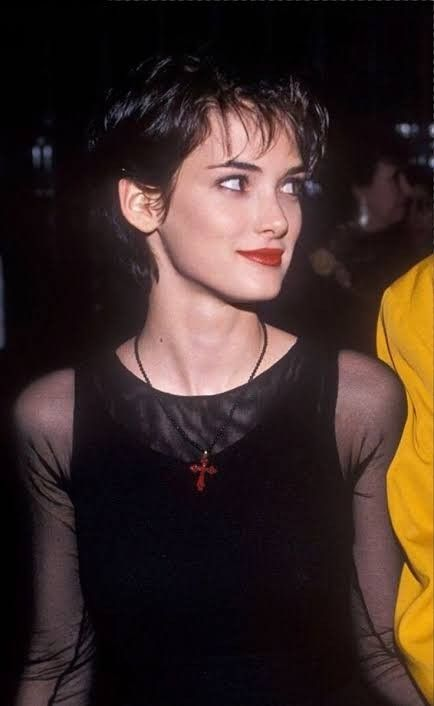
Some celebrities and public figures become style icons by design, the glitz and glamour of a life in red carpets, the unreachable aspiration of stardom. And then, by contrast, there’s Winona Ryder, who seemed to stumble into style icon status by utter accident. In an industry dominated by supermodels and self-absorbed public personalities, Ryder emerged as the antithesis of Hollywood flash: the girl in the thrift-store leather jacket, the pixie cuts, slip dresses that looked effortlessly perfect. And thus, the “weird cool girl” was born.
I’ve heard it from every adult who remembers the ’90s: “You look just like a young Winona Ryder!” It’s a comparison I’ve always loved, not just because she’s incredibly cool, but because her authenticity made her one of the most relatable icons to this day. She didn’t posture or chase trends; she embodied them before anyone else realized they were happening. She didn’t try to be a style icon, she just… was. Her legacy is a masterclass in the power of authenticity, blurring the lines between high fashion and what you could find in a thrift store. This case study will explore her biography, iconic fashion moments, and the lasting influence of her unique style on contemporary culture.
Brief Biography: From Lydia Deetz to Joyce Byers
Born Winona Laura Horowitz on October 29, 1971, Ryder’s beginnings were far removed from the glitz of Hollywood. She was raised on a ranch commune in Northern California, where her parents, both writers, surrounded her with an eclectic mix of artists, intellectuals, and countercultural figures, including family friend Timothy Leary, the Harvard psychologist turned psychedelic advocate (Britannica, 2025). This unconventional environment shaped Ryder’s identity as an outsider, fostering a sensibility that was both intellectual and bohemian. It’s easy to see how her upbringing bled into her on-screen presence and personal style: she never projected the polish of a studio-manufactured starlet, but rather the depth of someone who had always been slightly at odds with the mainstream.
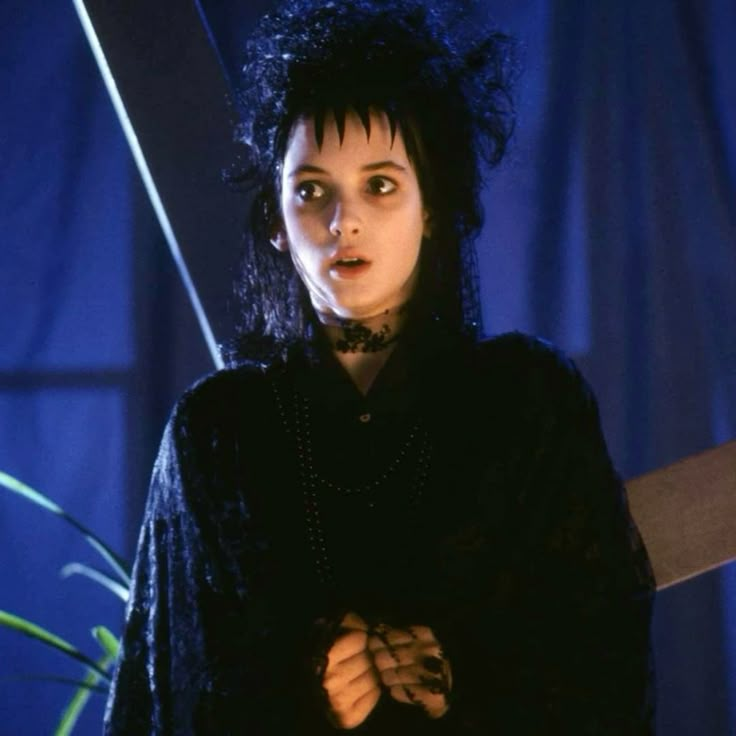
Her first major role as Lydia Deetz in Tim Burton’s Beetlejuice (1988) instantly defined her aesthetic and career path. As the sardonic, goth teenager clad in black lace and veils, Ryder wasn’t just playing a character; she was embodying an archetype that would inform both her career and her image. The role introduced her as the poster child for eccentric, alienated youth, a mantle she would carry into other cult classics like Heathers (1988), Edward Scissorhands (1990), and Reality Bites (1994). These films not only cemented her as Tim Burton’s new young muse, the cinematic voice of Generation X disillusionment, and gave visual form to a new kind of style: minimal, unforced, slightly androgynous, grunge-adjacent, and unapologetically moody.
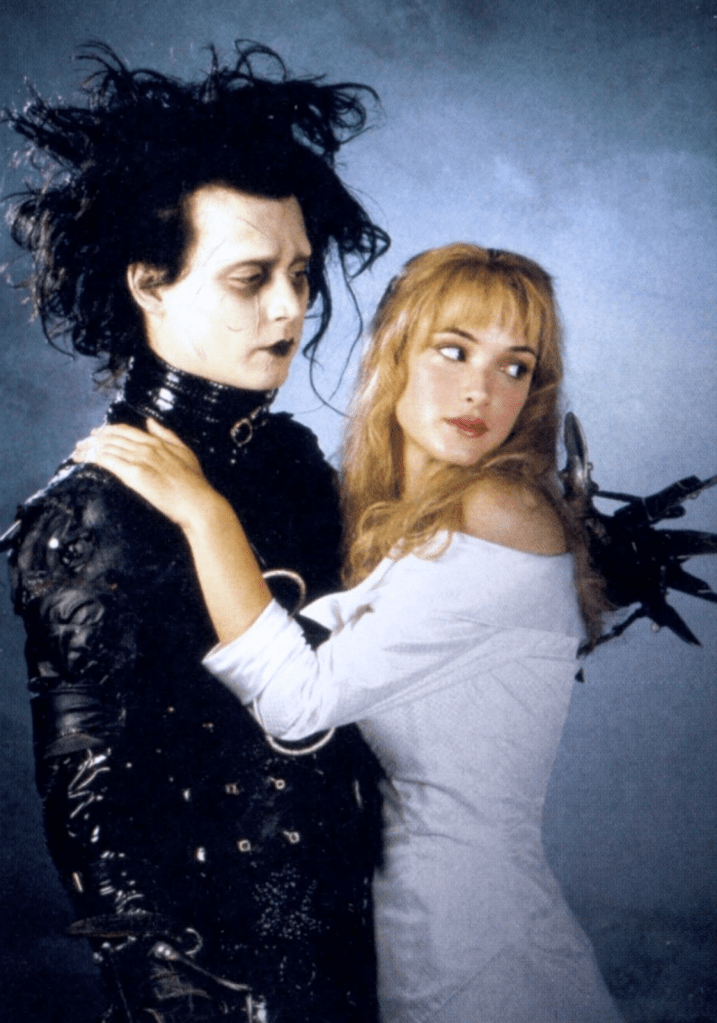
Off-screen, Ryder’s highly publicized relationship with Johnny Depp turned her into tabloid royalty, yet her fashion remained understated compared to the flash of other Hollywood couples of the era. Where other starlets opted for sequins and spectacle, Ryder appeared in slip dresses, thrift-store finds, and effortlessly tailored menswear. That quiet defiance, of choosing authenticity over glitz, was what made her resonate so deeply with her audience. Even as her roles evolved into more complex territory, such as Susanna Kaysen in Girl, Interrupted (1999), Ryder’s introspective characters mirrored the qualities fans had long associated with her personal style: vulnerability, rebellion, and a refusal to fit neatly into Hollywood molds. Her career trajectory and her wardrobe told the same story: one of a girl whose coolness wasn’t cultivated but lived, the natural outgrowth of her unconventional beginnings.
Key Fashion Moments
Winona Ryder’s style was never about ostentatious displays or carefully orchestrated couture, it was about cultivating an aura. She had a uniform that felt entirely her own, and that consistency is precisely why her looks continue to resonate decades later. Whether on the street, at an airport, or on the red carpet, Ryder embodied a mood: equal parts gothic, grunge, and intellectual cool. But always absolutely timeless.
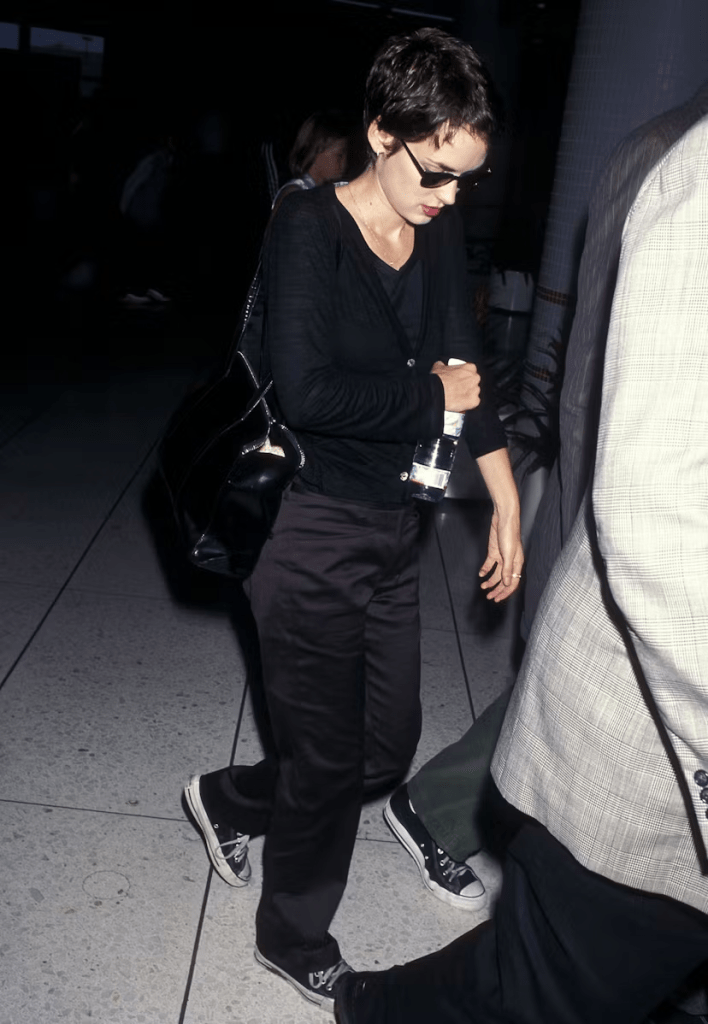
Goth-Grunge, But Make It Chic
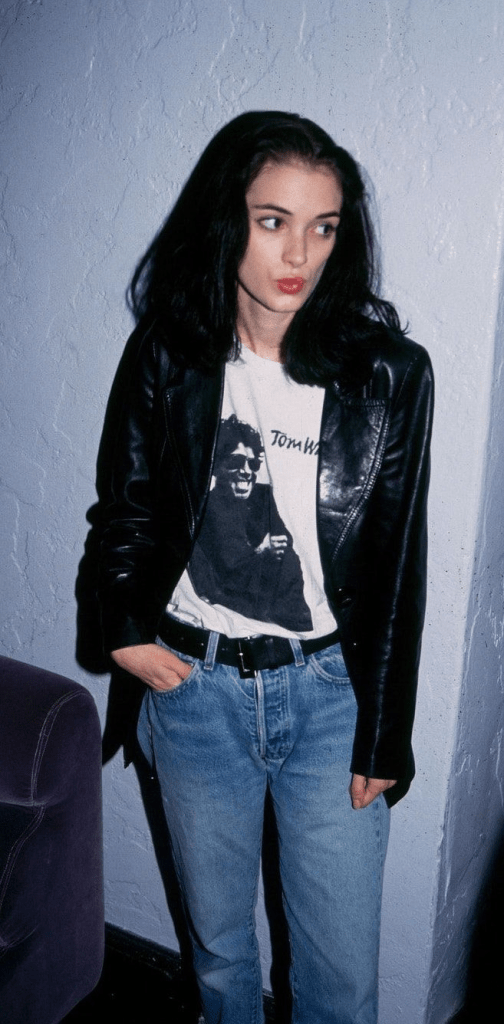
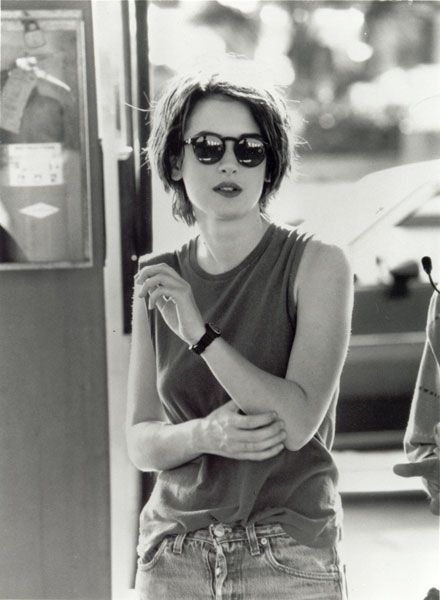
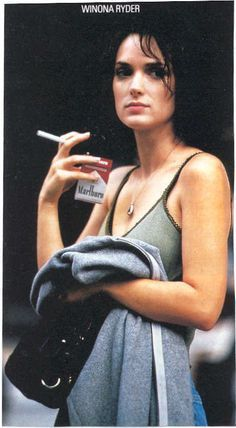
In the early 1990s, when “grunge” was synonymous with ripped jeans, flannels, and Doc Martens, Ryder elevated the aesthetic into something sleeker and more polished. Her version of grunge wasn’t sloppy; it was moody, refined, and intentional. She often paired worn-in leather jackets with high-waisted Levi’s, band T-shirts, and combat boots, creating a look that was rebellious yet strangely timeless (Nylon, 2021). One of her most celebrated casual outfits was captured at an airport in 1997, where she wore an oversized black leather jacket over straight-leg trousers and sneakers (Grazia Daily, 2022). The simplicity of the ensemble, and the nonchalance with which she wore it, transformed everyday basics into a cultural moment. It wasn’t just clothing; it was attitude.
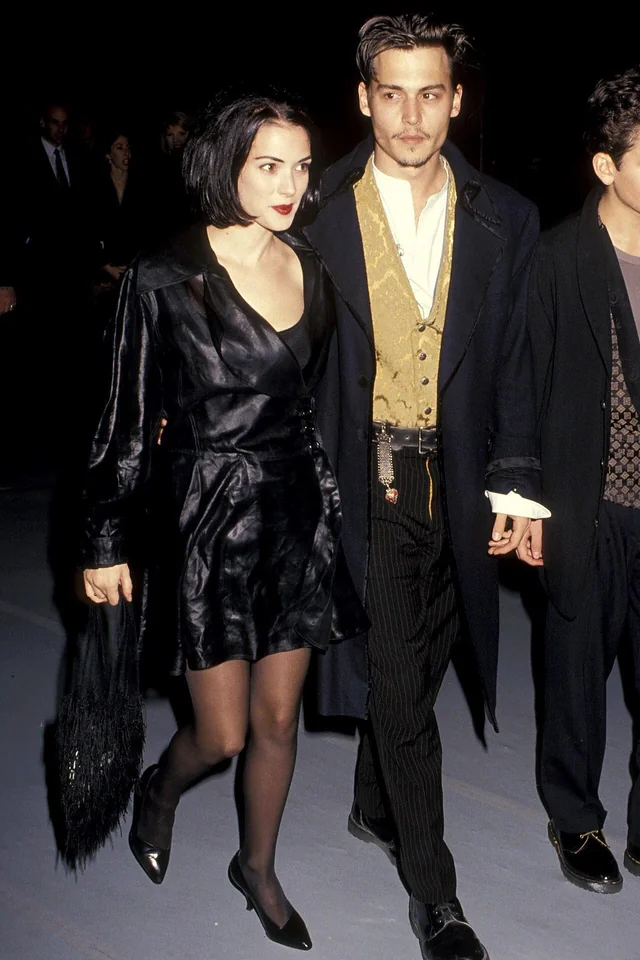
Red Carpet Minimalism
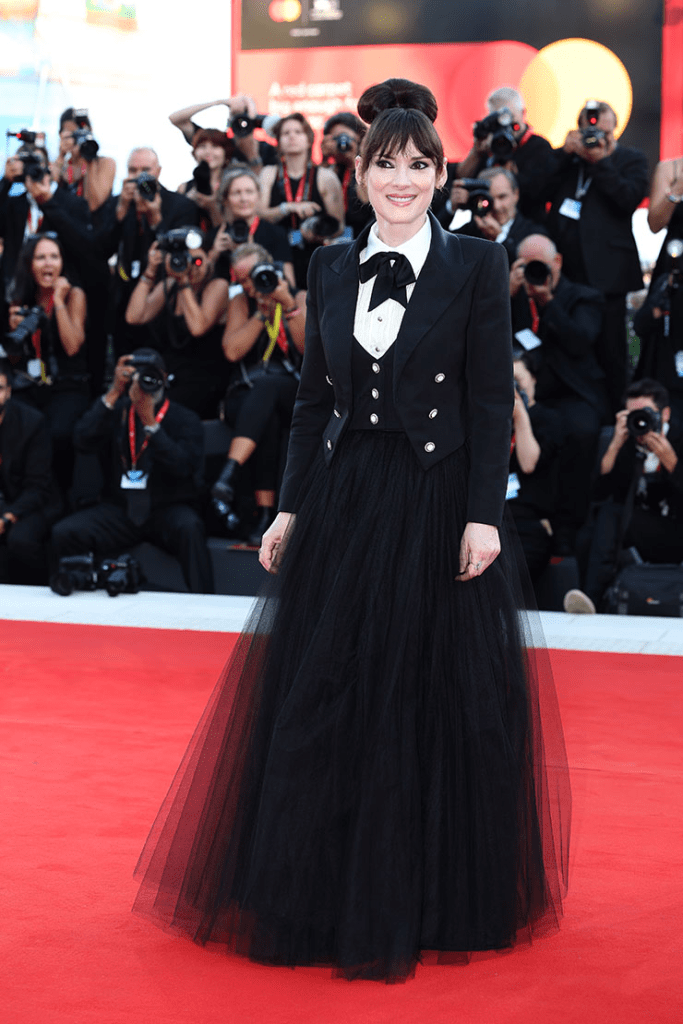
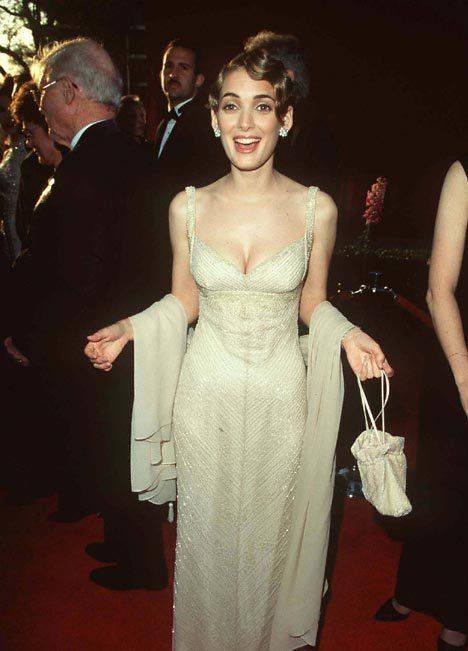
On the red carpet, where everyone else was wearing loud, colorful gowns, Winona stood out by doing the exact opposite. She basically owned simple, black dresses and menswear-inspired suits. At the Edward Scissorhands premiere in 1990, she wore a sleek black velvet blazer dress, a subtle nod to her dark on-screen counterpart, Edward, played by then-boyfriend Johnny Depp (Marie Claire, 2022). She also famously re-wore a strapless Giorgio Armani dress to the Oscars after being seen in it multiple times, proving that an outfit’s specialness doesn’t expire after one red carpet (Fashionista, 2020). Her look for the 1992 Dracula premiere was a masterclass in gothic romance, with a black corset top and dramatic fingerless gloves that somehow blended high fashion with the quintessential romantic goth aesthetic (Grazia Daily, 2022).
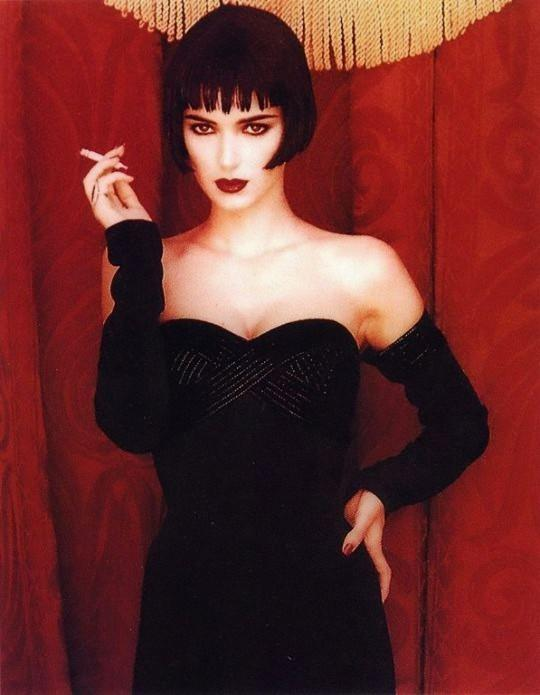
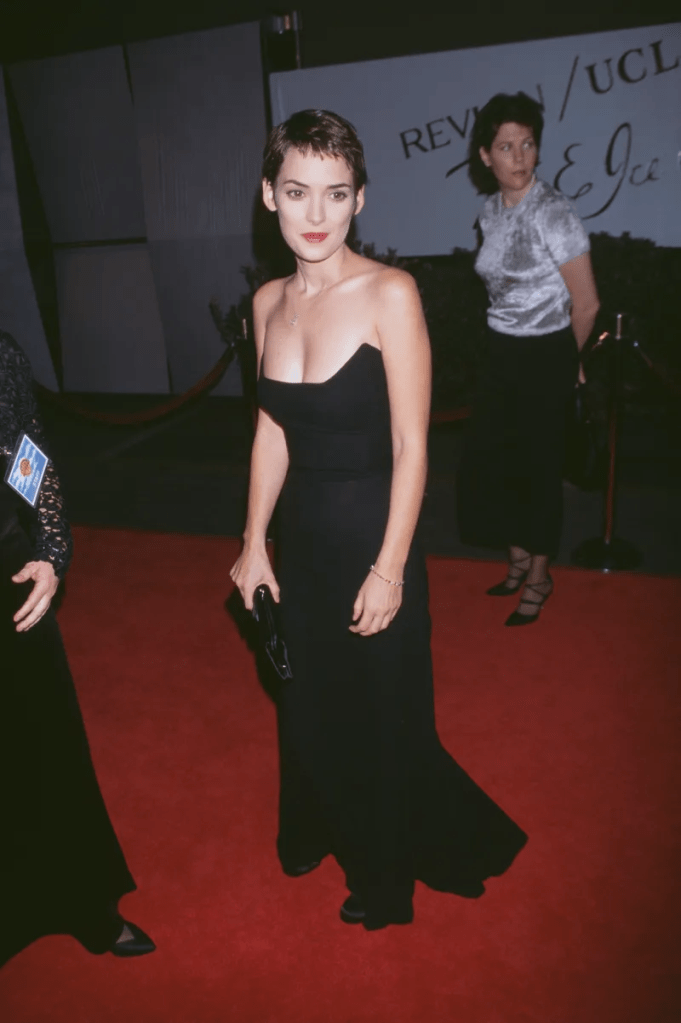
The Oversized Suit and Pixie Cut
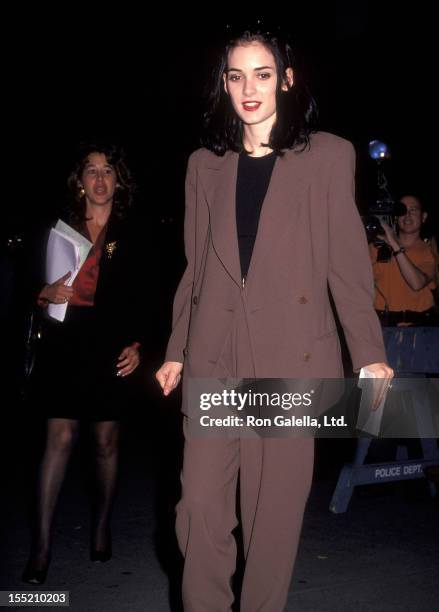
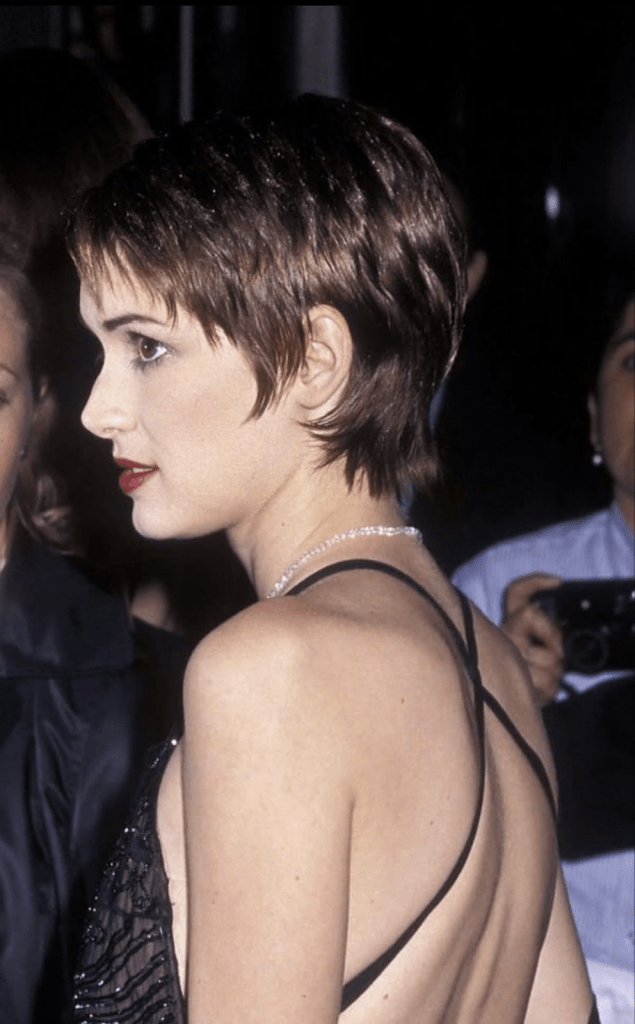
Ryder’s embrace of androgynous fashion further distinguished her from her peers. Winona had a thing for oversized menswear, and she really helped popularize the trend, transforming baggy tailoring into a chic, rebellious statement. At the 1991 premiere of Little Man Tate, she donned a loose-fitting tan trouser suit, pairing it with chunky loafers and visible white socks (Grazia Daily, 2022). The look subverted traditional expectations of female red carpet attire, positioning Ryder as someone unafraid to reject conventional Hollywood femininity. Complementing these androgynous silhouettes was her now-iconic pixie cut, which became a defining feature of her image. In stark contrast to the voluminous, styled hair popular in the late ’80s, Ryder’s cropped cut radiated effortless cool, inspiring countless imitations among young women at the time (L’Officiel USA, 2023). The haircut, like her wardrobe, was a visual declaration: simple, defiant, and ahead of its time.
Impact on Fashion and Culture
Winona’s influence extends far beyond a handful of memorable outfits; it lies in what those outfits stood for. In the 1990s, when pop culture was dominated by glossy supermodels, maximalist red carpets, and the commercial boom of fast fashion, Ryder stood as a quiet counterpoint. She became the unofficial face of anti-establishment cool, embodying the sense of disaffection and rebellion that defined Generation X. Her style wasn’t “aspirational” in the conventional sense, it was accessible, she wore things you can find in thrift stores, vintage shops and even one’s own closet. In doing so, she legitimized a way of dressing that rejected consumerism and celebrated individuality. As Ryder herself reflected, she thought it was “really cool” when thrift-store clothing became fashionable precisely because “it was something that everyone could afford” (Nylon, 2021). That ethos made her not just a style icon, but a cultural touchstone in a world that’s always pushing us to consume more.
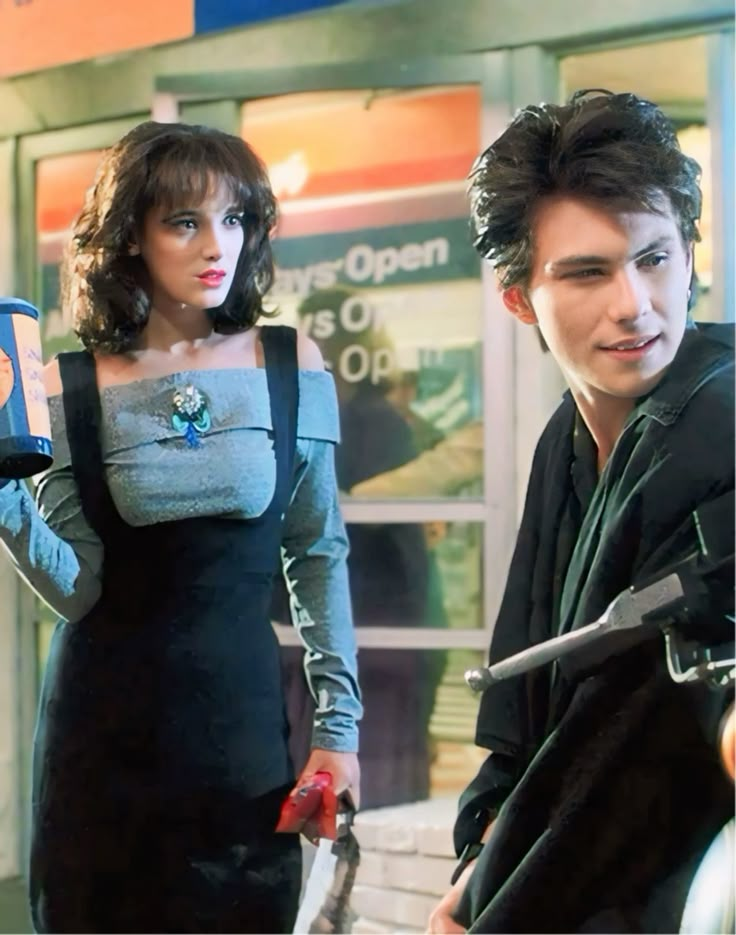
The grunge movement, with its unkempt hair, slouchy silhouettes, and lived-in denim, might have started in Seattle’s music scene, but Ryder gave it a cinematic and glamorous dimension. Unlike many of her peers who projected carefully curated Hollywood images, Ryder’s authenticity made her version of grunge resonate more deeply. She wasn’t just “wearing” the look, she embodied its spirit. Her closet of slip dresses, leather jackets, and combat boots offered a polished yet moody alternative to mainstream trends, bridging the gap between subculture and style guide. In Ryder, audiences saw someone who could wear thrifted Levi’s and still grace the cover of Vogue. That having style wasn’t about having money.
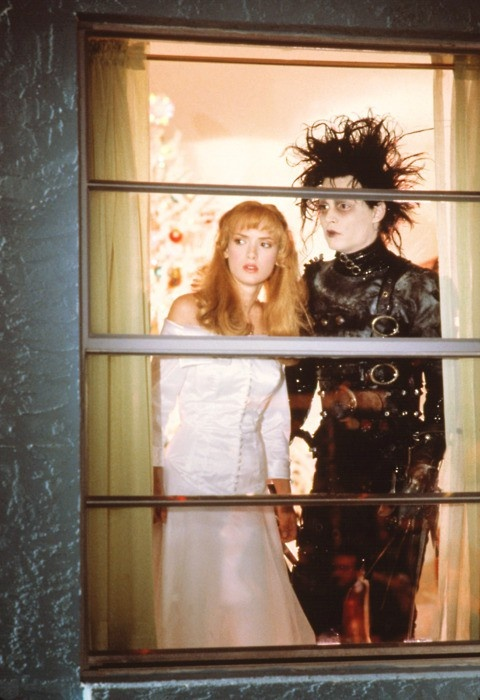
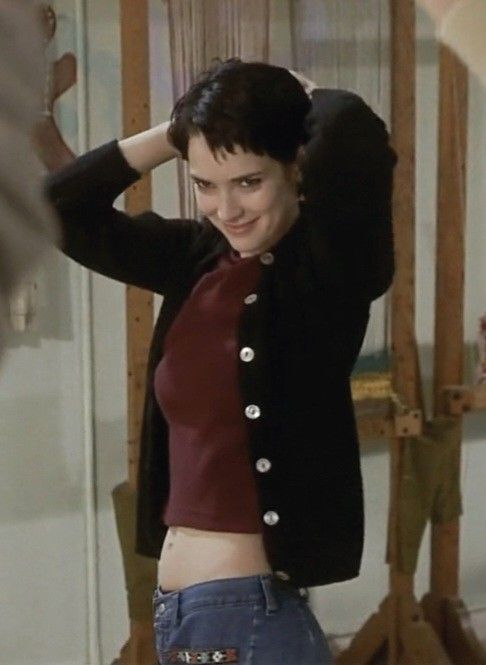
Crucially, Ryder’s fashion was inseparable from her roles on screen. Veronica Sawyer in Heathers (1988) became an icon of dark school-girl rebellion, while Lelaina Pierce in Reality Bites (1994) defined the look of post-collegiate malaise with her vintage cardigans and loose floral dresses. Even her ethereal wardrobe in Edward Scissorhands (1990) and her moody ensembles in Girl, Interrupted (1999) reinforced the tension between fragility and defiance that came to define her image. This synergy between her characters and her personal style blurred the line between Winona Ryder the actress and Winona Ryder the cultural archetype. She wasn’t just playing outsiders and rebels, she was an outsider and a rebel, and her clothes told the same story.
Ultimately, Ryder’s fashion impact was about democratization. She proved that style didn’t have to be expensive or inaccessible, but could emerge from individuality, self-expression, and storytelling. In doing so, she carved out a space for authenticity in an era of excess, cementing her status as both a generational voice and a lasting influence on how we understand fashion’s cultural power.
Contemporary Influence
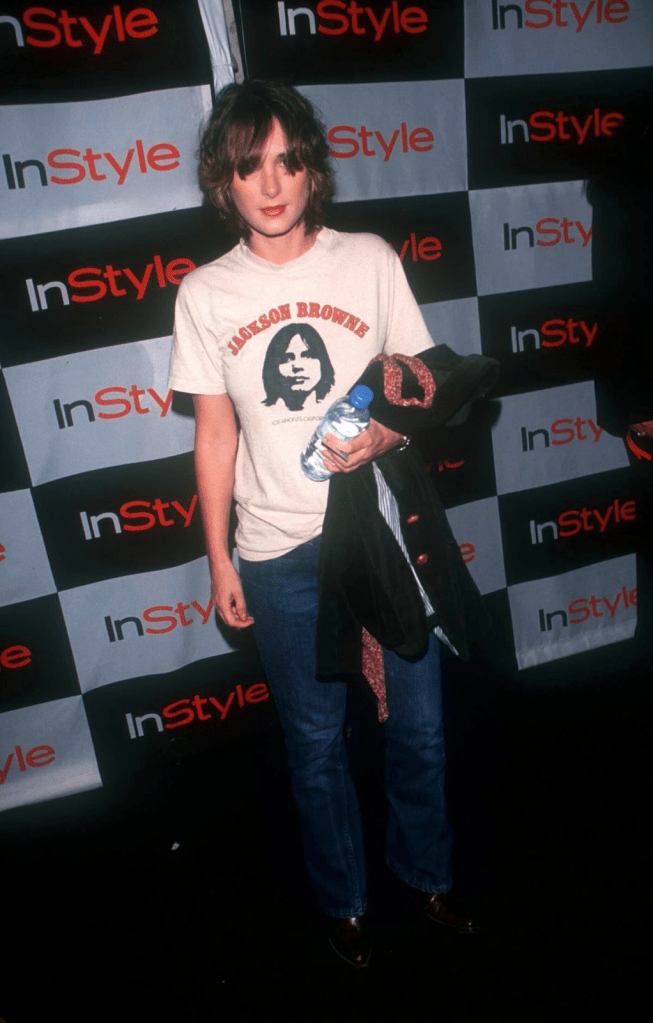
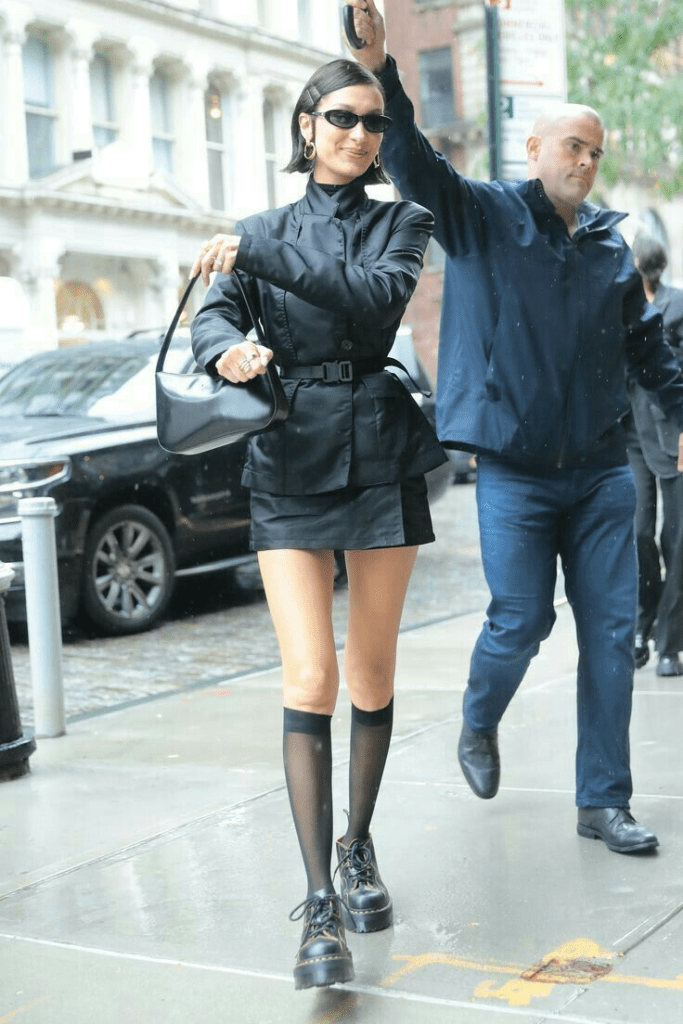
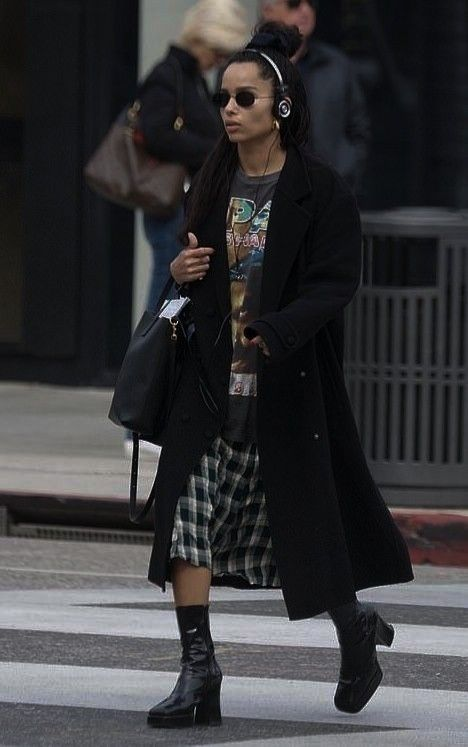
Despite taking a step back from the spotlight in the early 2000s, Winona’s influence never truly faded, it simply waited for everyone else to catch up. Today, her legacy has reemerged with striking force, reaffirming her status as a timeless style icon. Scroll through TikTok or Instagram, and it’s almost impossible not to encounter mood boards filled with her vintage street style, clips from Reality Bites, or paparazzi snapshots of her in slip dresses and oversized blazers. What once defined an alternative, anti-establishment aesthetic has become aspirational once again, proving that Ryder’s cool factor is impervious to time.
The goth-grunge aesthetic she helped pioneer has now been absorbed into the DNA of high fashion. Designers continue to borrow from her visual vocabulary—leather jackets, sheer slips, menswear-inspired tailoring, combat boots—and reinterpret it for the runway (ELLE UK, 2025). Celebrities and influencers like Bella Hadid and Zoë Kravitz regularly channel her looks, from slouchy vintage suiting to minimalist red carpet gowns, effectively keeping her wardrobe in circulation decades later. In Ryder’s case, what began as rebellion has been canonized as chic.

Her reemergence on screen has only amplified this renewed fascination. As Joyce Byers in Stranger Things, Ryder captivated an entirely new generation who may not have grown up with her ’90s filmography but are now discovering her talent—and, by extension, her unmistakable style. Her presence on the press circuit for Beetlejuice Beetlejuice has further underscored her ability to evolve without losing her edge, appearing in sleek, dark suits and gowns that feel rebellious yet contemporary (Cultured Mag, 2024). These appearances bridge her past and present, reminding audiences that her style is not stuck in nostalgia but continues to evolve in conversation with modern fashion.
Beyond acting, Ryder has also reestablished herself in fashion directly. Campaigns with brands like Marc Jacobs and Jimmy Choo have positioned her as both a symbol of retro cool and a beacon of modern relevance (Cultured Mag, 2024). Her collaborations are more than just nostalgic callbacks; they signal how fashion houses see her as an enduring muse whose influence speaks to both longtime admirers and younger consumers.
Ultimately, Ryder’s contemporary resonance lies in what she has always represented: authenticity. What was once the style of the outsiders—the thrifted, the offbeat, the underdone—has now become a model for a generation that values individuality above manufactured perfection. Winona Ryder’s style legacy demonstrates that true icons don’t follow trends; they create a blueprint others return to again and again. She remains proof that fashion, at its most powerful, is less about the clothes themselves and more about the ethos behind them.
Conclusion
Winona Ryder’s influence as a style icon is a masterclass in the power of authenticity. She didn’t approach fashion as spectacle, but as an extension of who she was: intellectual, moody, and a little offbeat. In doing so, she became far more than a celebrity with good taste, she embodied the aesthetic mood of a generation. Her blend of gothic romance, androgynous tailoring, and vintage simplicity spoke to the disillusionment of the 1990s while offering a blueprint for individuality that still resonates today (L’Officiel USA, 2023).
What makes Ryder remarkable is the continuity of her influence. From her earliest roles as the archetypal outsider to her present-day resurgence, her style has remained consistent in its refusal to conform. She blurred the lines between subculture and high fashion, between screen persona and personal identity, between rebellion and refinement. The result is a body of looks that feel as relevant now as they did thirty years ago.
As designers, stylists, and younger generations continue to mine her archive for inspiration, Ryder’s legacy proves that true style isn’t dictated by trend cycles but by integrity and self-expression. What began as quiet rebellion has become timeless influence. Winona Ryder didn’t set out to be a style icon—but that is precisely why she became one.
References
- Britannica, The Editors of Encyclopaedia. “Winona Ryder.” Encyclopedia Britannica, 2025.
- Cultured Mag. “Winona Ryder on Her Return to the Spotlight.” Cultured Mag, 2024.
- Fashionista. “Great Outfits in Fashion History: Winona Ryder’s Frequently Re-Worn Armani Dress.” Fashionista, 28 April 2020, https://fashionista.com/2020/04/winona-ryder-90s-style-black-dress-armani.
- Grazia Daily. “Winona Ryder’s Best ’90s Fashion Moments.” Grazia Daily, 2022, https://graziadaily.co.uk/fashion/news/10-winona-ryder-iconic-90s-fashion-moments/.
- L’Officiel USA. “The Most Iconic Trial Style in Pop Culture History: Winona Ryder, A$AP Rocky, More.” L’Officiel USA, 2023, https://www.lofficielusa.com/fashion/most-iconic-trial-style-pop-culture-history-winona-ryder-asap-rocky-jackie-o.
- Marie Claire. “Winona Ryder’s Red Carpet Look at the ‘Edward Scissorhands’ Premiere.” Marie Claire, 2022.
- Nylon. “Winona Ryder: The Reluctant Style Icon.” Nylon, 2021, https://www.google.com/search?q=https://nylon.com/style/winona-ryder-the-reluctant-style-icon.
- ELLE UK. “3 Nineties Winona Ryder Looks To Steal For 2025 – From Grunge Glamour To Red-Carpet Minimalism.” ELLE UK, 2025, https://www.elle.com/uk/fashion/a65488751/winona-ryder-90s-fashion/.

 Cat Jacobi
Leave a comment